
Is Silver Still Undervalued Compared to Gold? A Simple Ratio That Explains Everything
A Question That Feels Simple — But Isn’t
Gold gets the spotlight.
It’s discussed on news channels, held by central banks, and treated like a symbol of safety. Silver, meanwhile, often feels ignored — even though it’s everywhere in modern life.
That raises a quiet question many people are starting to ask.
Is silver still undervalued compared to gold?
The answer begins with a surprisingly simple idea.
The Gold–Silver Ratio, Explained
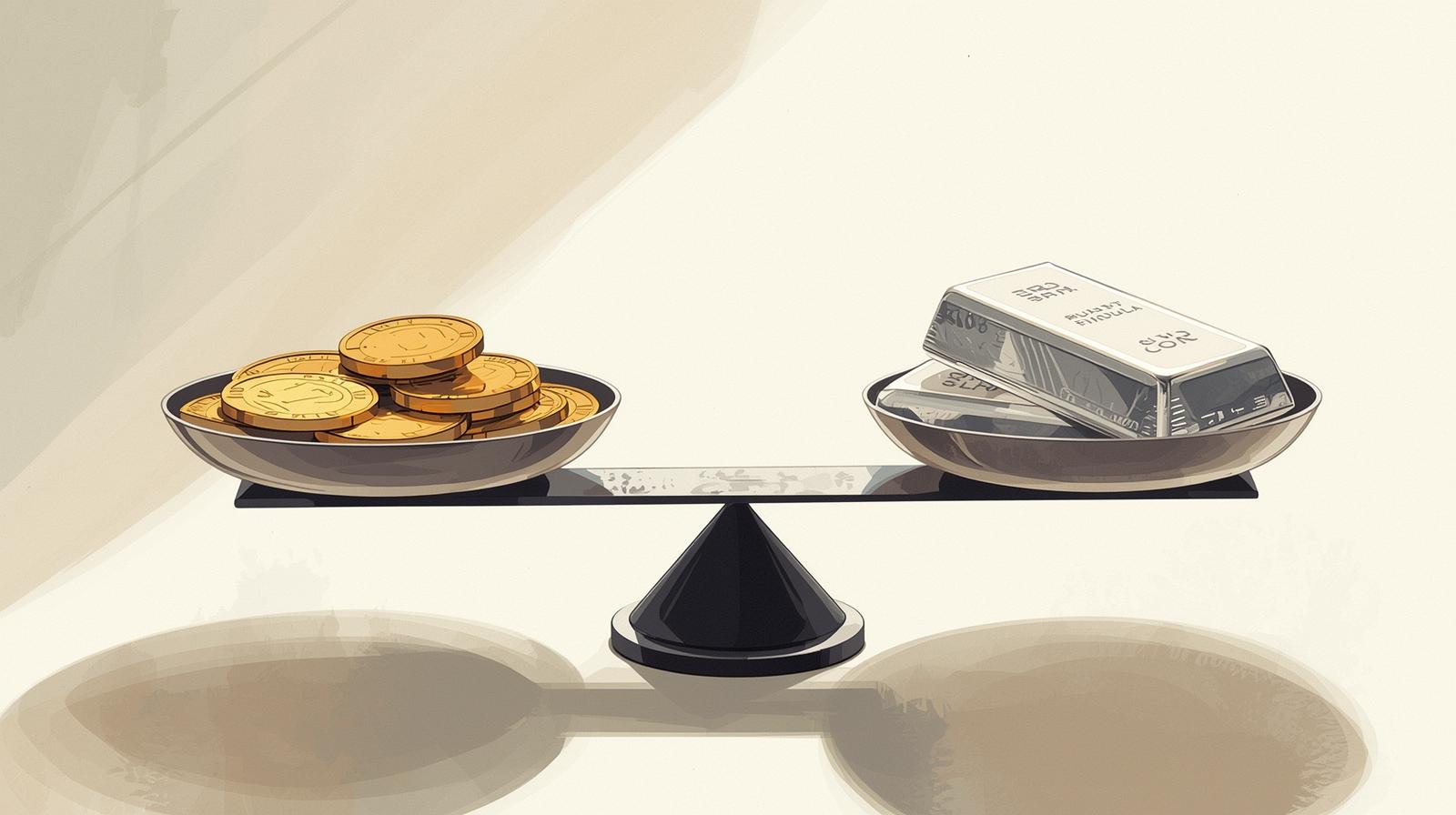
The gold–silver ratio compares how many ounces of silver equal one ounce of gold.
That’s it.
If gold is priced at 100 units and silver at 1 unit, the ratio is 100 to 1. When the ratio is high, silver is relatively cheap compared to gold. When it’s low, silver is relatively expensive.
This ratio has been used for centuries — not as a prediction tool, but as a perspective tool.
Why This Ratio Still Matters Today
Markets change.
Technology changes.
Economies change.
But relationships between assets often move in cycles.
The gold–silver ratio helps people step back from daily price noise and see how the two metals relate to each other over time.
It doesn’t tell you what to buy.
It helps you understand what’s being ignored.
A Long History of Silver Being Overlooked
Silver has always lived in gold’s shadow.
Gold is hoarded.
Silver is used.
That difference matters.
Because silver is tied to industry, its price often lags when attention flows into financial assets. Markets focus on gold first, then silver later — sometimes much later.
This pattern has repeated across history.
Why Markets Often Ignore Silver
Silver isn’t flashy.
It doesn’t signal power like gold.
It doesn’t sit in vaults on display.
Instead, it disappears into:
- Solar panels
- Electronics
- Medical devices
- Energy systems
Its value is quiet, and markets often underestimate quiet things.
The Emotional Side of Undervaluation
Undervaluation isn’t just about math.
It’s about attention.
Assets become undervalued when people stop talking about them, stop caring about them, or assume they’ll always lag behind something else.
Silver fits that story perfectly.
It’s familiar, but rarely respected.
That emotional neglect is part of why people keep rediscovering it late.
How This Cycle Feels Different
What makes today different is context.
Silver isn’t just money anymore.
It’s infrastructure.
The world now depends on silver for technologies shaping the future — a shift explained deeply in Why Silver Prices Are Rising Faster Than Expected in 2026.
That functional role gives silver a kind of relevance gold doesn’t have.
And markets are slowly adjusting to that reality.
The Ratio and the Current Silver Trend
When silver began moving strongly in 2025, the ratio didn’t collapse overnight.
It adjusted slowly.
That’s normal.
Ratios don’t move in straight lines. They compress over time as awareness spreads.
Understanding when the silver trend actually began helps explain why this adjustment is still in progress.
Trends move before narratives catch up.
Why Ratios Should Be Read Carefully
Here’s an important point.
The gold–silver ratio is not a promise.
It doesn’t guarantee outcomes.
It’s a lens.
Used responsibly, it helps readers think in relationships instead of headlines. Used irresponsibly, it becomes hype.
This article stays firmly in the first category.
Silver’s Dual Identity Complicates Comparisons
Gold is mostly held.
Silver is mostly consumed.
That makes comparisons tricky.
Silver’s price reflects:
- Investment sentiment
- Industrial demand
- Supply constraints
Gold reflects:
- Monetary policy
- Fear
- Stability
When silver rises faster than expected, it’s often because these forces align — not because it’s “catching up” mechanically.
Why Being “Undervalued” Doesn’t Mean Cheap
This is subtle, but important.
Undervalued doesn’t mean “low price.”
It means misunderstood.
Silver can be expensive and still undervalued if markets haven’t fully priced in its role in modern systems.
That’s why context matters more than numbers alone.
What New Readers Should Take From This
If you’re new to silver, here’s the calm takeaway:
- Gold and silver serve different purposes
- Silver’s value is more tied to the real economy
- The gold–silver ratio helps show attention gaps
- Being ignored doesn’t mean being unimportant
This perspective builds understanding — not urgency.