
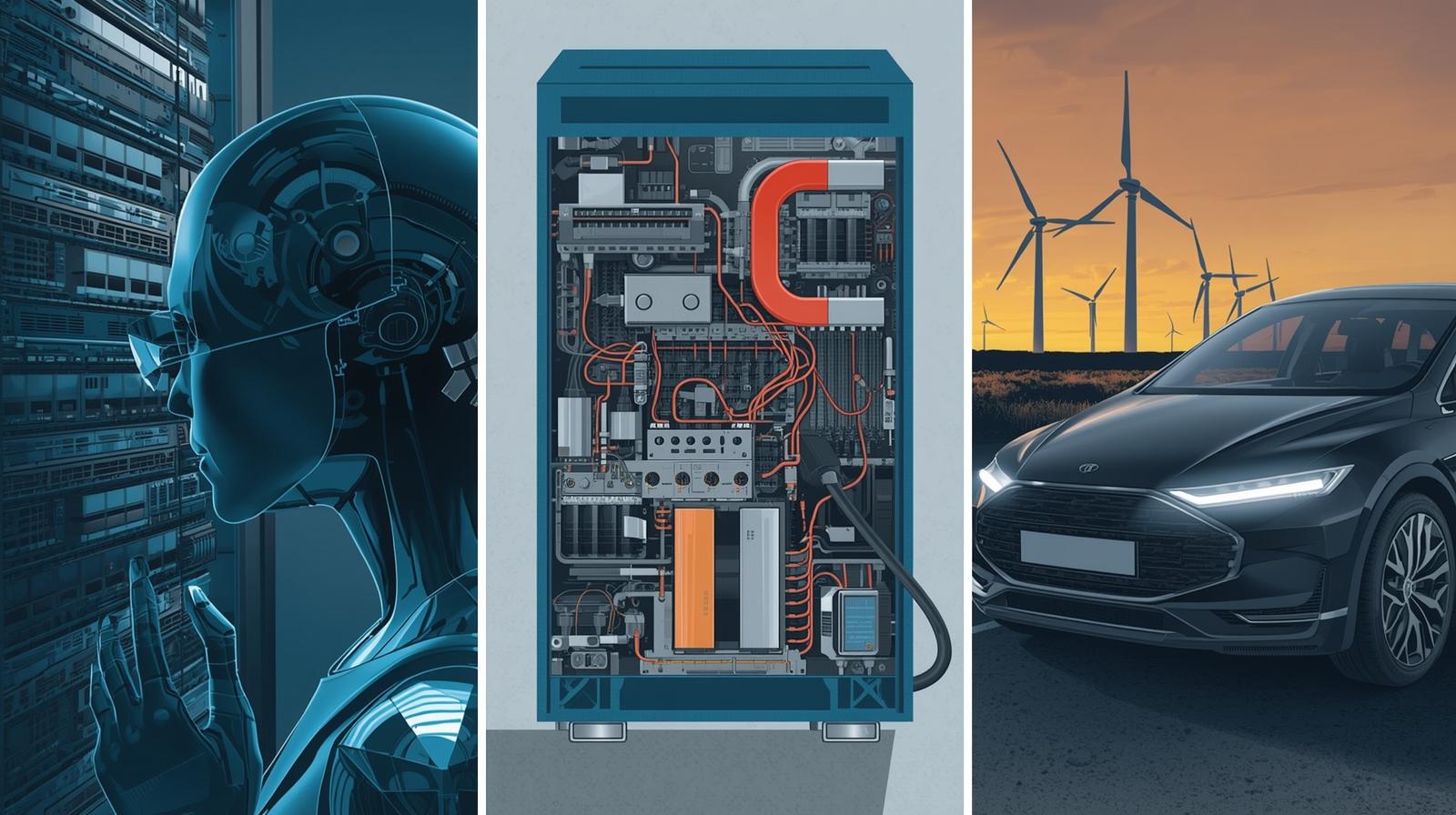
Rare Earth Metals: The Silent Backbone of AI and Clean Energy
The Most Important Metals You’ve Probably Never Thought About
They don’t sparkle.
They don’t trend on social media.
Yet without them, much of modern life would stop working.
Rare earth metals sit quietly inside the technologies we now depend on every day.
What “Rare Earth Metals” Actually Means
Despite the name, these metals aren’t scarce.
What’s rare is how difficult they are to extract and process.
They often exist in small amounts, mixed deeply into other materials.
That complexity is the real challenge.
Why the Modern World Depends on Them
Rare earth metals are essential for making strong magnets.
Those magnets power motors, data centers, wind turbines, and electric vehicles.
Without them, efficiency drops and systems become heavier and weaker.
Modern technology relies on precision — and these metals deliver it.
AI Runs on Hardware, Not Just Code
Artificial intelligence isn’t just software.
It lives inside physical machines that process massive amounts of data.
Those machines need compact, powerful components.
Rare earth magnets make that possible.
Data Centers Are Quietly Driving Demand
AI models require enormous computing power.
That power comes from servers running nonstop.
Rare earth elements help keep these systems efficient and compact.
This demand grows steadily, not suddenly.
Clean Energy Needs Rare Earths More Than People Realize
Wind turbines rely on powerful permanent magnets.
Electric vehicles need them for motors and braking systems.
Energy efficiency depends on them being small and strong.
Clean energy transitions are impossible without them.
Why Substitutes Aren’t Ready Yet
Researchers are trying to reduce reliance on rare earths.
But alternatives often sacrifice performance or efficiency.
In many cases, replacements still depend on them indirectly.
For now, rare earths remain essential.
Supply Is Concentrated — And That Matters
Rare earth supply is not evenly distributed worldwide.
Processing capacity is even more concentrated.
This creates vulnerability in global supply chains.
Markets don’t always reflect this risk clearly.
Mining Is Only Half the Story
Extracting rare earths is one step.
Refining them into usable materials is far harder.
Processing requires expertise, infrastructure, and environmental controls.
That barrier limits how quickly supply can grow.
Environmental Trade-Offs Are Real
Rare earth mining must be handled responsibly.
Poor practices cause lasting environmental damage.
Modern projects focus on cleaner processing — but progress is slow.
Sustainability and supply must move together.
Why Prices Don’t Always Tell the Story
Rare earth metals aren’t traded like gold or oil.
Prices are often hidden inside contracts and manufacturing costs.
That makes their importance easy to underestimate.
Their value shows up in finished products, not charts.
How Rare Earths Fit the Bigger Metals Picture
Rare earths don’t work alone.
They support and enhance other critical materials shaping the future:
- Lithium stores energy
→ See The Lithium Supply Story No One Is Explaining Clearly - Copper moves electricity
→ Read Why Copper Is Becoming the Most Important Metal of the Next Decade - Platinum enables clean reactions
→ Explore Why Platinum Is Quietly Coming Back After Years of Being Ignored
Together, they form the backbone of modern systems.
Why This Story Is Still Underreported
Rare earths aren’t consumer-facing.
People don’t buy them directly.
They work invisibly, behind the scenes.
But invisible doesn’t mean unimportant.
The Emotional Side of Invisible Infrastructure
We trust technology to work instantly.
We expect clean energy to scale smoothly.
Rare earth metals quietly make those expectations possible.
They carry the weight of progress without recognition.
Why Awareness Is Growing Now
As AI expands and energy systems shift, limits become visible.
Supply chains matter more than ever.
Understanding rare earths helps explain global technology decisions.
This awareness is long overdue.
What This Means for the Future
Rare earth metals won’t dominate headlines.
They’ll dominate functionality.
And functionality is what shapes the real world.
Their role will grow alongside AI and clean energy — steadily, not loudly.
A Calm, Honest Takeaway
Rare earth metals are not a trend.
They are infrastructure.
And infrastructure always matters more than hype.
The future is being built on materials most people never see.